The Stark Reality of Cyber Threats
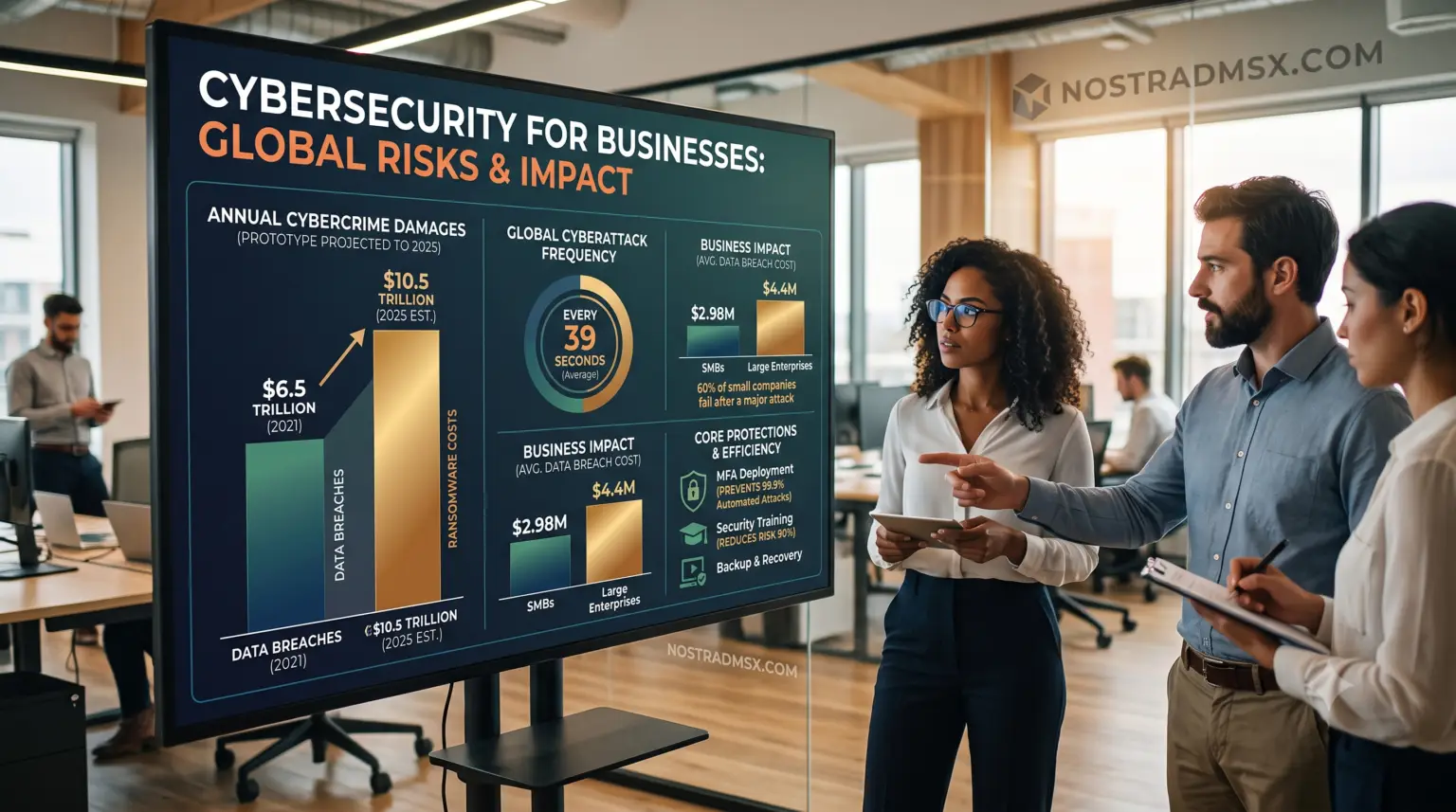
Every 39 seconds, a cyberattack occurs somewhere in the world. This means that while you’re reading this article, organizations and individuals are falling victim to cybercriminals who operate with increasing sophistication and a decreasing fear of consequences.
For Business Owners: Your Digital Survival Depends on It
Financial Impact Beyond Recovery
Small and medium businesses incur an average cost of $2.98 million per data breach, and 60% of small companies go out of business within six months of a cyberattack. These figures cover regulatory fines, legal fees, customer compensation, business interruption, and the cost of rebuilding a reputation.
Consider the ransomware attack that shut down the Colonial Pipeline in 2021, disrupting fuel supplies across the Eastern United States. The company paid $4.4 million in ransom, but the true cost included operational losses, emergency response expenses, and long-term reputational damage that continues to affect their business relationships.
Legal and Regulatory Consequences
Modern data protection regulations like GDPR, CCPA, and HIPAA impose severe penalties for security failures. Companies can face fines of up to 4% of annual revenue for privacy violations. More importantly, business leaders can face personal liability, including criminal charges, when their negligence leads to data breaches affecting customers or employees.
The Trust Factor
Customer trust, built over years, can evaporate overnight following a security incident. Studies show that 65% of consumers lose trust in companies that experience data breaches, and 27% will never return as customers. In today’s competitive marketplace, this damage to trust often proves more devastating than immediate financial losses.
The interconnected nature of modern cyber risk means business and personal boundaries blur.
Remote work has eliminated clear boundaries between personal and professional digital lives. Employees access business systems from personal devices and home networks, while personal social media accounts become professional networking tools. A security failure in one area inevitably affects the other.
Supply Chain Vulnerabilities
Modern businesses depend on interconnected digital ecosystems. When one organization suffers a cyberattack, the impact cascades through its entire network of partners, suppliers, and customers. The SolarWinds hack demonstrated how a single compromised software update affected thousands of organizations worldwide.
Practical Steps for Immediate Protection
For Business Leaders
- Implement Multi-Factor Authentication: This single measure can prevent up to 99.9% of automated attacks on user accounts. Deploy it across all business systems, starting with email and financial platforms.
- Regular Security Training: Human error causes 95% of successful cyberattacks. Monthly training sessions and simulated phishing exercises dramatically reduce susceptibility to social engineering.
- Backup and Recovery Planning: Maintain secure, regularly tested backups stored separately from your main network. This preparation enables rapid recovery from ransomware attacks without paying criminals.
The Cost of Inaction
Cybersecurity isn’t an expense—it’s an investment in digital survival. The cost of prevention will always be lower than the cost of recovery, assuming recovery is even possible. Many businesses and individuals never fully recover from sophisticated cyberattacks.
In our hyper-connected world, cybersecurity failures don’t just affect the immediate victim. They undermine trust in digital systems that modern society depends upon for commerce, communication, and critical infrastructure.
Moving Forward: A Shared Responsibility
Cybersecurity is not solely the responsibility of IT departments or social media companies. It requires active participation from every business leader who makes decisions affecting digital assets and every individual who participates in online communities.
The question isn’t whether you’ll face cyber threats—it’s whether you’ll be prepared when they arrive. In cybersecurity, as in many aspects of life, hope is not a strategy. Through deliberate preparation, continuous learning, and proactive defense, we can protect what matters most in our increasingly digital world.
The time to act is now. Every day of delay increases your exposure to threats that grow more sophisticated and damaging. Start with basic protections today, then build comprehensive defenses over time. Act now to protect your business, your reputation, and your peace of mind.
Here is one resource that can help business owners to take on cybersecurity:
https://www.ftc.gov/business-guidance/small-businesses/cybersecurity
I also have startme pages that has tools to help anyone with cybersecurity:
https://start.me/p/9olaLl/cybersecurity-training-for-business-owners