Category: Personal

How to Mount an External Hard Drive on Linux

On Windows, plugging in a drive gives it a letter like E:\ automatically. Linux doesn’t — it makes you mount the drive, which just means: attach the drive’s contents to a folder on your filesystem.

Picture your Linux filesystem as one big tree starting at /. An unmounted drive is a box sitting on the floor, not connected to anything. Mounting grafts that box’s contents onto a folder — a mount point — so that opening the folder means you’re looking inside the drive.

Read More »

NostradmsX – Origin Story

The Evolution of NostradmsX The NostradmsX pseudonym didn’t emerge from a single moment of inspiration. It organically evolve through layers that carry various meanings No_Str_A Every digital identity has its genesis story, and mine begins with three simple words: no strings attached. I found myself drawn to pro bono work—creating websites, designing graphics, and crafting pamphlets for bands, churches, and non-profits who couldn’t afford professional services. The username “no_str_a” (no strings attached) became my signature. While I asked only for permission to include these works in my school project submissions, the real reward was something far more valuable: the realization that technology could be a force for enabling others. Those early experiences shaped an ideal that persists today. I still carry the idea that our digital tools should serve not just ourselves, but our communities. I became part of the open source community. Nostra – from “La Cosa Nostra” During

Read More »

Professional vs. Personal Digital Boundaries in Cybersecurity

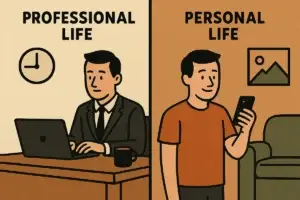
Understanding the Digital Divide The line between our professional and personal digital lives has become increasingly blurred, especially with remote work, personal devices for business use, and social media presence. This convergence creates unique cybersecurity challenges that require careful boundary management. Professional Digital Persona Characteristics: Typical Activities: Personal Digital Persona Characteristics: Typical Activities: Where Boundaries Blur Bring Your Own Device (BYOD): Using personal smartphones, tablets, or laptops for work creates immediate overlap between professional and personal data on the same device. Social Media Crossover: Personal social media accounts can inadvertently reveal professional information, while professional networks may expose personal details. Work-from-Home Scenarios: Home networks handling both personal and professional traffic, family members potentially accessing work devices, and informal communication channels. Email and Communication: Using personal email for work tasks, or work email for personal communications creates data mixing. Cybersecurity Implications Professional Risks Affecting Personal Life Data Breach Exposure: A breach

Read More »

MyDigitally App – Audit your Digital Assets

Building MyDigitally: The Journey to Protecting Our Digital Legacies   We spend years building our lives online. We buy domain names, accumulate thousands of dollars in gaming libraries, grow monetized YouTube channels, and pay for lifetime software subscriptions. Yet, if you look at a standard bank statement or a traditional physical will, none of these assets exist. If something happens to you, those accounts often vanish into the digital ether, leaving your loved ones locked out and billions of dollars in value completely lost. That is why I built MyDigitally (mydigitally.app). The app evolved from a simple core inventory tool into a complete, secure digital vault ecosystem.   Why MyDigitally is Needed The problem is simple: our digital lives are worth more than we realize, and they are completely undocumented.   What is MyDigitally and How Does It Work? MyDigitally is a secure, personal digital asset vault. Think of it

Read More »

Knowledge Management: Building a Second Brain with PARA

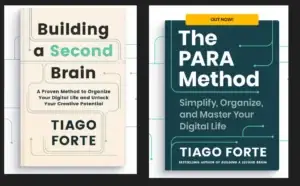
Do you ever feel like your head is stuffed with unfinished ideas, half-read articles, and an overwhelming sense that you’re forgetting something crucial? In our hyper-connected world, information overload is the new normal, leading to “Information Exhaustion” and mental fatigue. The good news is you don’t have to rely solely on your biological brain to keep it all straight. It’s time to outsource the job of remembering to technology and build what many are calling a Second Brain. The Core Idea: Building a Second Brain (BASB) The Building a Second Brain (BASB) methodology, developed by Tiago Forte, is a systematic approach to organizing your digital life, dramatically increasing your productivity, and unlocking your creative potential. The philosophy is simple yet revolutionary: Your biological brain is for thinking and creating, not for storing every single piece of data. BASB advocates for an external, growing body of knowledge that ensures you have

Read More »

The “Seen” Illusion: How Imperfect Tech is Ruining Our Digital Relationships

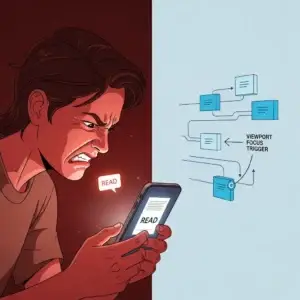
Have you ever felt that familiar knot tighten in your stomach? You send a thoughtful text, a crucial work question, or a declaration of love. Then, the blue double-check appears, followed by the silent, devastating word: “Seen.” No reply. Just the digital ghost of acknowledgment, immediately triggering the internal narrative: I’ve been seenzoned. I’m being ignored. They don’t care. As a developer, I look at that little “Read” receipt and see something fundamentally flawed. It’s not a marker of conscious human acknowledgment; it’s a technical signal that, when misunderstood, creates serious social conflict. We are getting mad at other people for a failure that actually lies in the code. The History of Expectation: Snail Mail vs. Instant Chat To understand the modern “seenzone” rage, we need to rewind the clock. Historically, communication was defined by the gap between transmission and response, a gap that bred patience and tempered expectations. Consider

Read More »

Feel free to visit the other sections