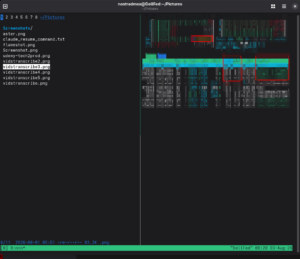

nnn: The Fastest Way to Browse Files (and Preview Images) From Your Terminal
A beginner’s guide to installing and using nnn on Fedora — plus how it compares to ranger and feh. Ever opened a graphical file manager just to glance at a folder of screenshots, and watched it take three full seconds to load? Terminal users solved this problem years ago. The tool many of them reach for is nnn — a file manager so small it starts in milliseconds, yet powerful enough to preview images, play music, and extract archives without ever touching a mouse.
This guide covers what nnn is, why it beats the alternatives for most people, how to install and use it on Fedora, and where nnn fits next to two other tools you’ll hear about constantly in this space: ranger and feh.
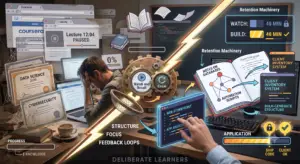
How Consulting and Taking Online Courses Inspired – Deliberate Learners –
In one, I was an independent IT consultant — building web storefronts, small mobile apps, and social media strategies for local businesses, then teaching those clients how to actually run the tools once I handed them over. In the other, I was a student of everything. Coursera tabs. Udacity nanodegrees. A half-watched lecture paused at 12:04 for three weeks. A specialization I’d paid for and opened twice.

SEO: Search Engine Optimization
If you just launched a WordPress site — or inherited one that’s never been properly configured for search — this guide walks through every step needed to get Google to find it, understand it, and rank it fairly. It’s written as a checklist you can work through top to bottom, but each item includes the *why*, the *how*, and the mistakes that trip people up.
This is the general-purpose version of the playbook. It assumes a WordPress site with Yoast SEO installed, but the underlying principles (canonical URLs, verified ownership, a clean sitemap, and healthy Core Web Vitals) apply to any CMS on any host.
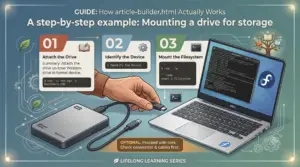
How to Mount an External Hard Drive on Linux
On Windows, plugging in a drive gives it a letter like E:\ automatically. Linux doesn’t — it makes you mount the drive, which just means: attach the drive’s contents to a folder on your filesystem.
Picture your Linux filesystem as one big tree starting at /. An unmounted drive is a box sitting on the floor, not connected to anything. Mounting grafts that box’s contents onto a folder — a mount point — so that opening the folder means you’re looking inside the drive.

Knowledge Management: Building a Second Brain with PARA
Do you ever feel like your head is stuffed with unfinished ideas, half-read articles, and an overwhelming sense that you’re forgetting something crucial? In our

Importance of Note-Taking in Cybersecurity
Information overload is the silent adversary of most cybersecurity professionals. Having an unrelenting flood of information like compliance updates, threat intelligence, vulnerability reports, and evolving

JIL – Journey In Learning
Life is the ultimate university. Just when we think we’re done with school after receiving that official diploma or certificate, whether from a traditional brick-and-mortar
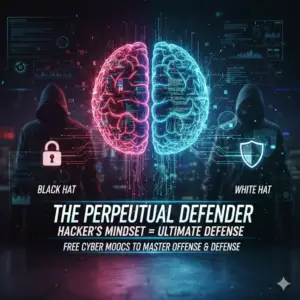
The Perpetual Defender: Why a Hacker’s Mindset is the Ultimate Cybersecurity Skill
The digital landscape is a battlefield defined by one absolute rule: The attack always evolves. For those of us dedicated to protecting systems—the “White Hats”—stagnation
Practical Guide: How to Avoid Being a Victim of Ransomware & Social Engineering
The practical guide to avoiding ransomware and social engineering emphasizes that prevention through good security habits is far more effective than dealing with the aftermath of an attack.